The 5-Minute Magnet™ Method
Five minutes. One targeted pattern. A different response to practise.
The 5-Minute Magnet™ Method uses short, structured practices to help interrupt stress-driven reactions, reduce automatic thought and symptom loops, and reinforce the therapeutic work we do in sessions.
Rather than giving you another long exercise to find time for, each practice is designed to fit into ordinary life - before work, after a difficult moment, when symptoms begin to build, or when you notice yourself slipping back into an old pattern.
Small practice. Repeated consistently. Built for real life.
Book Your Initial ConsultationWhy Five Minutes?
Because change does not only happen in the therapy room.
What happens between sessions matters too.
A five-minute practice is short enough to actually use, while still giving you time to pause, notice what is happening and practise a different response.
The goal is not simply to feel calm for five minutes.
It is to make the response we are building in therapy easier to access when you actually need it.
Why Short Practice Matters
5 MINUTES A DAY
In a randomised study of 108 adults, five minutes of daily breathwork or mindfulness over 28 days improved mood and reduced anxiety.
22 STUDIES
A meta-analysis of 22 experimental studies found that micro-breaks of 10 minutes or less improved wellbeing by increasing energy and reducing fatigue.
84% ADHERENCE
In a study using five-minute mindful-breathing practices three times a day, participants achieved 84% adherence, with lower perceived stress reported after three months.
SHORT PRACTICE. REPEATED OFTEN.
Research shows that meaningful change does not always require long daily practice. Brief, consistent practice repeated over several weeks can influence mood, attention and automatic behavioural patterns.
That is the thinking behind the 5-Minute Magnet™ - making therapeutic practice short enough to repeat consistently, so you can reinforce a different response in everyday life.
How the 5-Minute Magnet™ Works

Identify
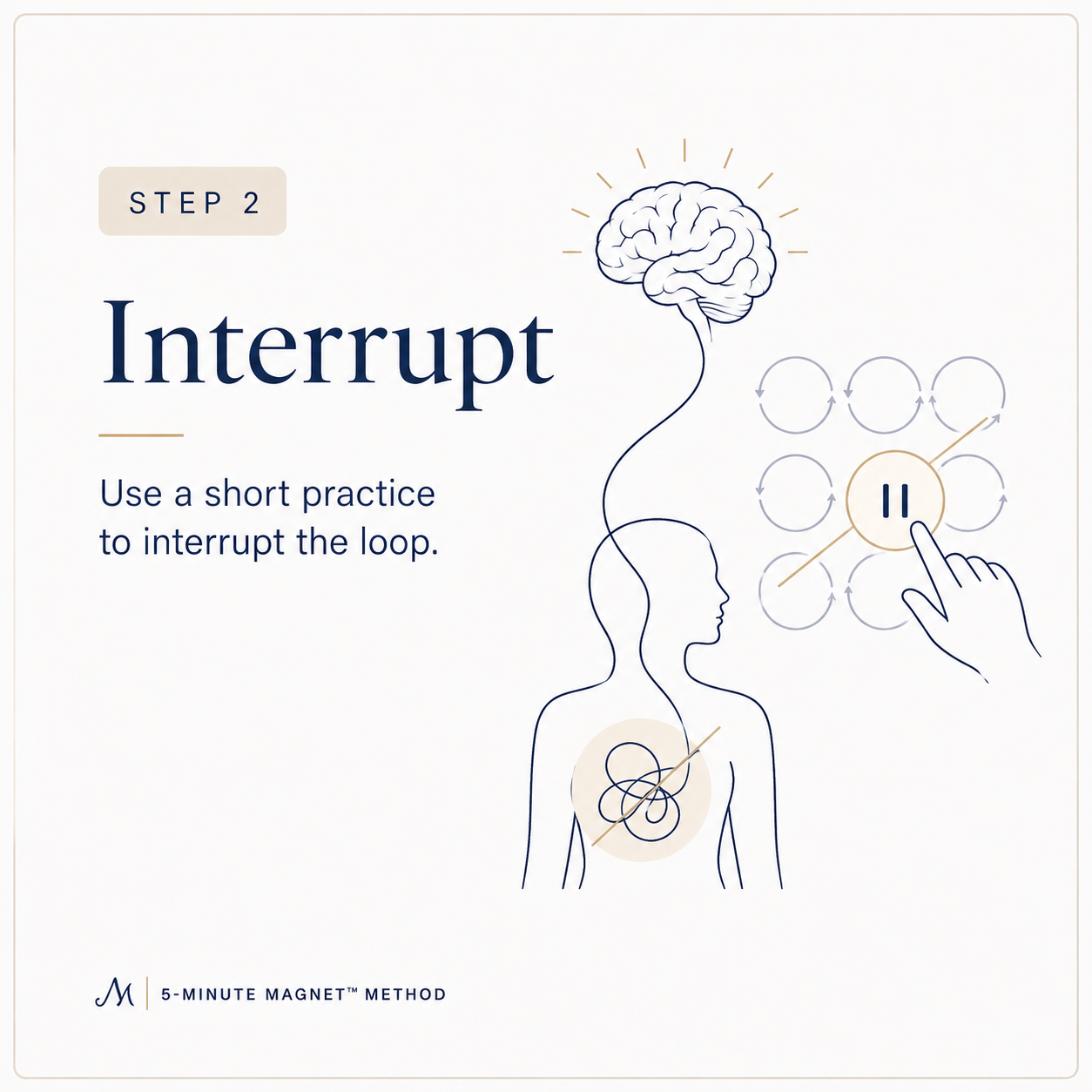
Interrupt
We use a short, targeted practice to interrupt the automatic response.
The aim may be to calm the response, reduce checking, shift attention or help you respond differently to a symptom or situation.
By practising a different response in the moment, we begin to weaken the old pattern and create more choice in what happens next.
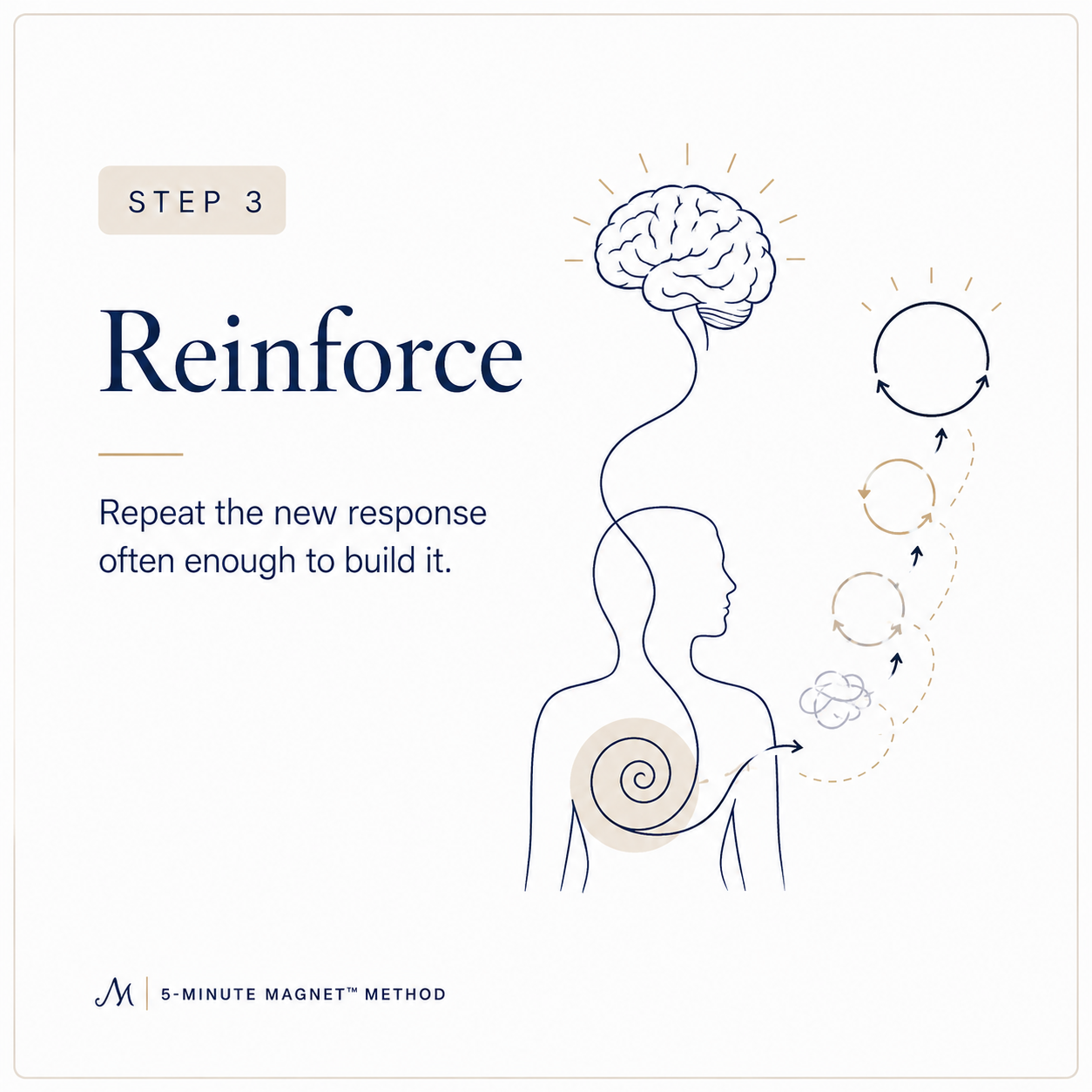
Reinforce
How It Fits Into Therapy
The 5-Minute Magnet™ is not a standalone cure or a replacement for therapy.
It is a practical way of helping the work we do together carry into everyday life.
You leave sessions with something specific to practise - short enough to use, targeted enough to be relevant, and designed to help reinforce a different response over time.
This is not about being calm all the time. It is about becoming better at changing what happens next.
What Can a 5-Minute Magnet™ Practice Target?
I use the method where a repeated brain–body response is contributing to the problem.
This may include:
Gut–Brain Symptoms
IBS, urgency, nausea, symptom anticipation, toilet anxiety, digestive hypervigilance and fear of flare-ups.
Anxiety & Overthinking
Worry loops, mental rehearsal, reassurance seeking, physical anxiety, difficulty switching off and constantly anticipating what could go wrong.
Confidence & Avoidance
Building confidence before work, school, travel, social situations, sport, presentations or other situations that have become associated with anxiety or symptoms.
Stress & Emotional Regulation
Recognising when the nervous system has become highly activated and developing more useful ways of responding before the pattern escalates.
Midlife & Life Transitions
Overwhelm, loss of confidence, changing identity, difficult decisions and the feeling of being caught in patterns that no longer fit the life you want.